The line between an “herb” and a “spice” can get a little blurry, and that’s where the term herbal spice comes to life. Generally, we think of herbs as the leafy green parts of a plant, like basil, oregano, or mint. We often think of spices as coming from other parts the seeds (like coriander), the bark (like cinnamon), or the roots (like turmeric).
An herbal spice often bridges this gap. It’s a plant that is used both for its flavorful qualities in cooking and its traditional, wellness-supporting role in teas and remedies. A great example is ginger. We use the root as a spice to add heat to our cooking, but we also steep it in hot water to make a soothing tea for an upset stomach. So, an herbal spice is really any plant part that adds depth to our food and a sense of well-being to our routines.
From Garden to Kitchen: The Many Roles of Herbal Spices
These plants are incredibly versatile. Their journey doesn’t end in the spice rack; it’s just beginning.
In Your Cooking
This is where most of us meet herbal spice for the first time. They are the foundation of flavor in cuisines all over the world.
- Building Flavor: Garlic and ginger form the base of countless stir-fries and curries. Similarly, the “holy trinity” of many Mexican dishes includes oregano, cumin, and chili peppers.
- Adding Freshness: Leaves like cilantro, basil, and mint are often added at the very end of cooking. They provide a bright, fresh counterpoint to rich, slow-cooked dishes.
- Creating Warmth: Spices like cinnamon, clove, and nutmeg are famous for their warm, sweet profiles. They are essential in baking, but also add incredible depth to savory dishes like stews and braises.
Using an herbal spice in your cooking is an easy way to reduce salt without sacrificing taste. They bring complexity and excitement to every bite. For inspiration on combining them, our DodewRecipes guide to spice blends can help you create your own signature mixes.
In Your Teacup
This is perhaps the most soothing way to enjoy herbal spice. A caffeine-free infusion, often called a “tisane,” allows the full character of the plant to shine.
- Soothing and Calming: Chamomile flowers and lemon balm are famous for their gentle, relaxing qualities. A cup before bed can be a wonderful signal to your body that it’s time to unwind.
- Warming and Invigorating: A blend featuring ginger, cinnamon, and a pinch of black pepper is like a warm hug on a cold day. It’s vibrant and can be wonderfully uplifting.
- Settling and Comforting: Peppermint leaves and fennel seeds have been used for generations to soothe the stomach and aid digestion after a meal.
Making a tea is simple. Just steep your chosen herbal spice in freshly boiled water for 5-10 minutes. The longer it steeps, the stronger the flavor and character will be.
A Closer Look at Common Herbal Spices
Let’s get to know a few of these powerhouses a little better.
1. Ginger (The Root)
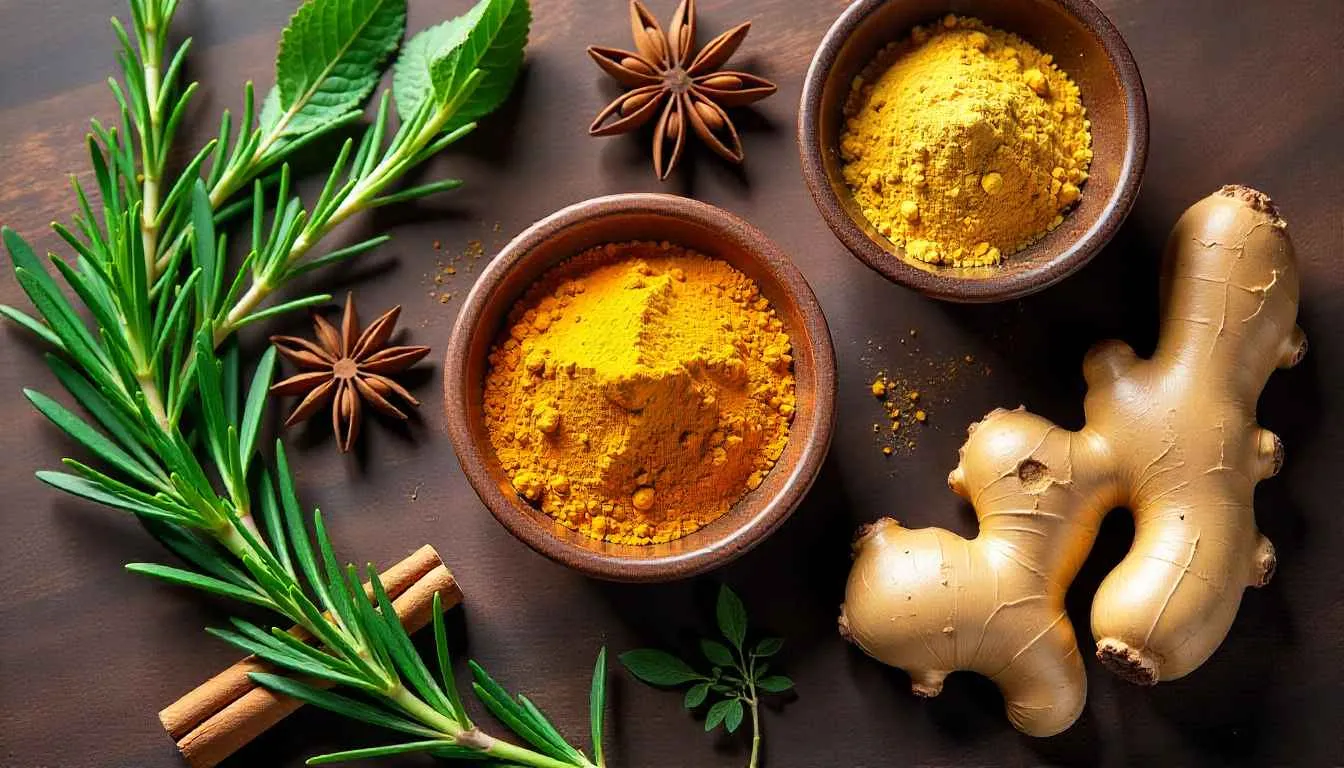
Ginger is a knobby, beige root with a sharp, spicy, and slightly sweet flavor.
- In Cooking: Grate it into sauces, stir-fries, and salad dressings. It pairs beautifully with garlic, soy sauce, and scallions.
- In Tea: Steep a few thin slices of fresh ginger in hot water for a zesty, warming drink that’s perfect when you feel a chill.
2. Cinnamon (The Bark)
Cinnamon comes from the inner bark of trees. It’s available as rolled-up “quills” (sticks) or as a ground powder. Its taste is warm, sweet, and woody.
- In Cooking: It’s a star in baked goods like apple pie and cinnamon rolls. But don’t forget it in savory dishes! A small stick in a pot of rice, lentils, or a meat braise adds incredible warmth.
- In Tea: A cinnamon stick is a classic addition to any spiced tea blend. It makes the whole house smell incredible.
3. Turmeric (The Root)
Turmeric is a bright orange root related to ginger. It has an earthy, slightly bitter, and peppery flavor. It’s the main spice in curry powder.
- In Cooking: It gives curries their golden color. You can also add it to rice, roasted vegetables, or even scrambled eggs for a color and health boost.
- In Tea: “Golden milk,” made by steeping turmeric in warm milk (often with other spices), is a beloved and soothing beverage.
4. Peppermint (The Leaf)
Peppermint is a vibrant green herb with a cool, refreshing flavor that instantly wakes up the senses.
- In Cooking: Chop it fresh and add to salads, grain dishes like couscous, or as a garnish for desserts.
- In Tea: Peppermint tea is one of the most popular herbal teas in the world. It’s incredibly refreshing iced on a hot day and soothing after a meal.
According to the National Center for Complementary and Integrative Health, peppermint has a long history of use for soothing digestion.
How to Start Your Own Herbal Spice Journey
You don’t need a fancy degree to bring more herbal spice into your life. Here are a few simple ways to begin.
- Start with One: Pick one new herbal spice each week. If you always use dried oregano, try fresh. If you’ve never cooked with fresh ginger, buy a small piece and experiment.
- Grow Your Own: Many herbs are incredibly easy to grow in pots on a sunny windowsill. Basil, mint, rosemary, and thyme are great starters. There’s nothing like using a sprig you grew yourself.
- Buy Whole When You Can: Whole spices, like cumin seeds or cinnamon sticks, retain their flavor and potency much longer than pre-ground powders. Grind them yourself in a small coffee grinder or with a mortar and pestle for the freshest taste.
A Final Pinch of Perspective
In the end, exploring the world of herbal spice is about reconnecting with the simple, profound wisdom of plants. It’s about remembering that flavor and well-being can come from the ground up. These plants remind us to slow down, to smell the rosemary, to taste the complexity in a single clove, and to find comfort in a steaming, fragrant cup.
They are a bridge to cultures, to history, and to a more mindful way of living. So, the next time you’re in your kitchen, reach for that jar in the back of the cupboard. Smell it. Taste it. Let it inspire you. Your next great meal, or your next moment of quiet peace, might just be a pinch away.
All images in this post are generated by Freepik.